Leave Your Message
Selecting reliable Instrument Transformers manufacturers requires more than comparing prices or reading polished product pages. Global buyers need verified technical capability, stable production, and responsive support. This guide examines leading manufacturers that serve utilities, industrial plants, renewable energy projects, and electrical equipment integrators.
The evaluation considers current transformer and voltage transformer designs, insulation systems, accuracy classes, thermal performance, and short-circuit strength. It also reviews compliance with recognized IEC and IEEE standards, factory testing, calibration records, and quality management practices. Practical details matter. A transformer may operate in a dusty substation, a humid coastal plant, or a compact switchgear cabinet. Each environment demands different construction choices.
Delivery capability also deserves close attention. Buyers should examine lead times, export experience, spare-part access, and after-sales engineering support. Clear drawings and traceable test reports can prevent expensive installation mistakes. No supplier is perfect. Some manufacturers offer excellent engineering but limited regional service. Others provide fast delivery while offering fewer customization options. That trade-off deserves honest consideration.
The companies discussed here are not ranked by marketing claims alone. Their market reputation, product breadth, manufacturing experience, and documented reliability provide a more useful comparison. Still, buyers should verify recent certificates, references, and technical proposals before signing contracts. Requirements vary by project, grid code, climate, and operating voltage. A careful shortlist remains essential.
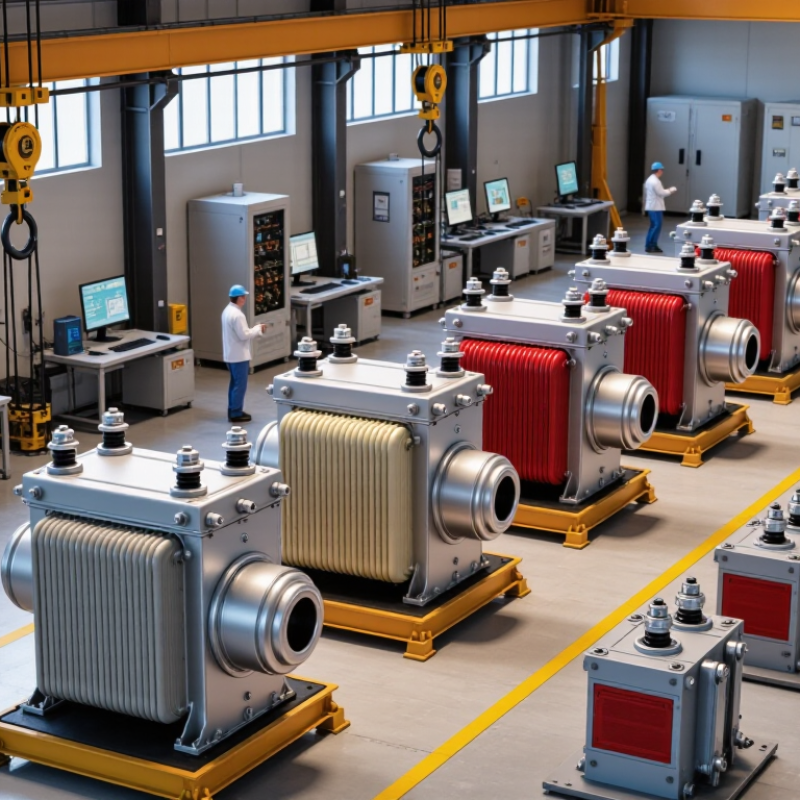
Instrument transformers translate high voltage and current into measurable, safer signals. They support metering, protection, and system control. Current transformers measure line current, while voltage transformers reduce voltage for meters and relays. Combined units can help operators inspect a substation without approaching energized conductors.
Their design choice depends on the application. Protection-class current transformers must withstand fault currents without early saturation. Metering units require precise accuracy across normal operating loads. Voltage transformers also need suitable insulation, burden capacity, and frequency performance. IEC 61869 provides widely used requirements for these devices. Small specification errors can distort relay decisions. That risk is easy to underestimate.
Grid expansion is increasing demand for dependable measurement. IRENA’s Renewable Capacity Statistics 2024 reported 473 GW of renewable capacity added during 2023. Renewables represented 86% of total new power capacity that year. Solar farms need instrument transformers at collector substations and grid-connection points. Wind facilities use them for protection, revenue metering, and remote monitoring. The IEA’s Electricity 2024 report also projected strong global electricity-demand growth through 2026, reinforcing the need for accurate network visibility. In field work, technicians often check wiring, polarity, and secondary burden before trusting readings. A current-transformer secondary should never be left open while energized. That practical detail still causes preventable mistakes. Even well-designed installations deserve a second inspection.
| Instrument Transformer Type | Primary Purpose | Typical Measurement or Output | Core Applications | Common Standards | Key Selection Criteria | Global Buyer Considerations |
|---|---|---|---|---|---|---|
| Current Transformer (CT) | Reduces high primary current to a standardized, measurable secondary current while providing electrical isolation. | 1 A secondary 5 A secondary Metering and protection signals | Power-grid substations, switchgear, generators, motors, energy meters, and protection relays. | IEC 61869-1 and IEC 61869-2; IEEE C57.13 is widely used in North America. | Ratio, accuracy class, burden, short-time thermal current, insulation level, and knee-point voltage for protection cores. | Confirm whether the CT is for metering, protection, or dual-purpose service. Never leave a CT secondary open while energized. |
| Voltage Transformer (VT/PT) | Steps down high system voltage to a standardized low voltage for measurement, control, and protective functions. | 100 V 110 V Secondary voltage outputs for meters and relays | Transmission and distribution substations, busbar measurement, synchronizing, revenue metering, and relay protection. | IEC 61869-1 and IEC 61869-3; IEEE C57.13 for applicable instrument transformer installations. | Voltage ratio, accuracy class, rated burden, insulation level, ferroresonance behavior, and grounding arrangement. | Check system frequency, phase-to-ground voltage, connection method, and the required protection or metering class. |
| Capacitive Voltage Transformer (CVT) | Uses a capacitive divider and electromagnetic unit to measure high transmission-line voltage. | Reduced voltage for measurement and protection; may also provide power-line carrier coupling. | High-voltage and extra-high-voltage transmission networks, line protection, synchronizing, and communication systems. | IEC 61869-1 and IEC 61869-5; relevant utility and grid-code requirements may also apply. | Rated voltage, transient response, accuracy, carrier-frequency performance, ferroresonance suppression, and environmental design. | Particularly suitable for higher-voltage networks where a conventional electromagnetic VT may be less practical. |
| Combined Current and Voltage Transformer | Integrates current and voltage measurement functions in one assembly to reduce footprint and installation complexity. | Separate current and voltage secondary circuits for metering and protection. | Outdoor substations, compact switchyards, revenue metering points, and high-voltage bay installations. | Applicable parts of IEC 61869; IEEE C57.13 may apply depending on the project and jurisdiction. | Independent accuracy requirements, insulation coordination, phase relationship, enclosure design, and terminal configuration. | Useful where space is limited, but replacement and testing procedures should account for both transformer functions. |
| Toroidal or Window-Type CT | Measures current through a conductor passing through the transformer aperture without requiring a primary winding. | Low-current or medium-current secondary output for metering, protection, or residual-current detection. | Low-voltage switchboards, motor control centers, cable systems, busbars, and retrofit projects. | IEC 61869-1 and IEC 61869-2; local low-voltage equipment standards may also be relevant. | Window diameter, conductor arrangement, ratio, burden, accuracy, insulation, and installation clearance. | Verify that the cable or busbar can pass through the opening and that the primary conductor is centered as required. |
| Bushing Current Transformer | Uses a power-equipment bushing conductor as the primary winding to provide current measurement without a separate primary conductor. | Metering and protection current signals integrated into transformers, breakers, or generators. | Power transformers, generator transformers, circuit breakers, and gas-insulated or oil-insulated equipment. | IEC 61869-1 and IEC 61869-2; equipment-specific standards may define additional requirements. | Bushing dimensions, available space, ratio, insulation coordination, thermal performance, and accuracy under fault current. | Must be designed together with the host equipment. Interface drawings and factory testing are essential for global projects. |
| Zero-Sequence CT | Detects residual or earth-fault current by measuring the vector sum of currents in all phase conductors. | Residual current signal for ground-fault protection and earth-leakage monitoring. | Medium-voltage cable feeders, motor protection, switchgear, industrial distribution, and grounding-fault systems. | IEC 61869 series and applicable protection-equipment standards. | Internal aperture, sensitivity, ratio, saturation performance, cable arrangement, and relay compatibility. | All relevant phase conductors should pass through the core together, unless the protection scheme specifies another arrangement. |
| Electronic or Low-Power Instrument Transformer | Provides a low-level analog or digital measurement signal through a sensor-based design instead of a conventional high-burden secondary. | Low-power analog output or digital sampled values for intelligent electronic devices. | Digital substations, intelligent switchgear, compact medium-voltage systems, and condition-monitoring platforms. | IEC 61869-6 and applicable IEC 61869 sensor standards; IEC 61850 may apply to digital communication systems. | Output interface, bandwidth, accuracy, electromagnetic compatibility, cybersecurity architecture, and auxiliary power requirements. | Confirm compatibility with the protection relay, merging unit, communication protocol, and substation automation architecture. |