Top 10 Current Sensors in China You Need to Know?
In the rapidly evolving field of electronics, "Current Sensors" play a crucial role. These devices measure electric current, vital for ensuring safety and efficiency in various applications. Dr. Li Wang, a renowned expert in sensor technology, states, "Current sensors are the backbone of modern electrical systems." This highlights their importance in today's technological landscape.
As manufacturers in China innovate, the current sensor market is experiencing significant growth. New technologies enhance accuracy and reliability. However, challenges remain. Some sensors may not meet industry standards. It is essential to choose wisely among the leading options.
Understanding the landscape of current sensors is crucial for professionals in the industry. Many products come with unique features, but not all are reliable. Performance varies widely across brands. So, a deep dive into the top current sensors in China is necessary. It allows users to distinguish between high-quality devices and those that fall short.
Overview of Current Sensor Technology in China
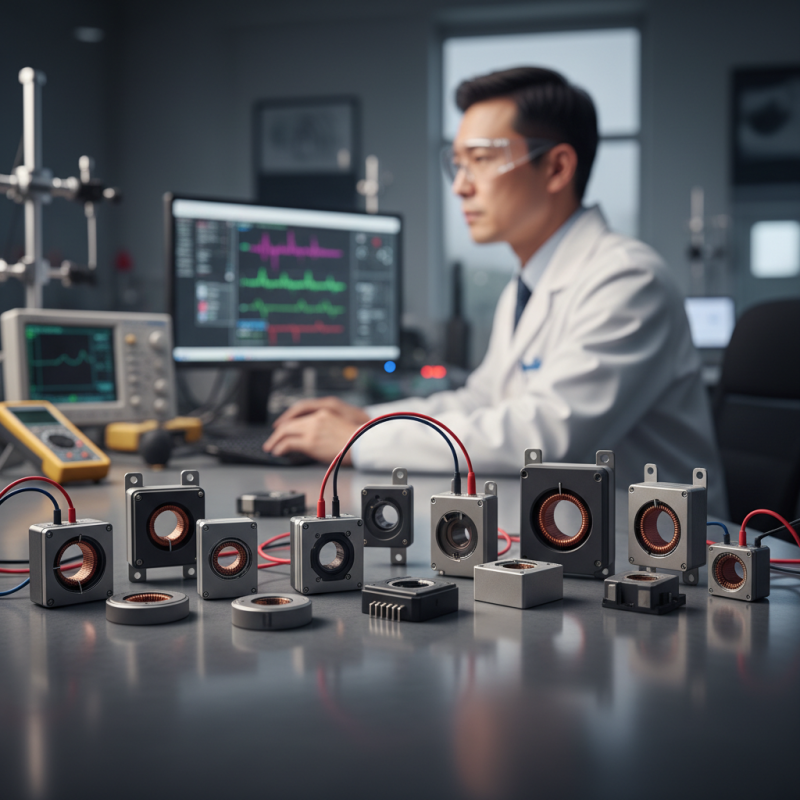
Current sensor technology in China is rapidly evolving. This growth is driven by increasing demand for accurate and efficient energy management systems. According to recent reports, the current sensor market in China is expected to reach $2 billion by 2025. This projection reflects a compound annual growth rate (CAGR) of around 15%.
Many sectors utilize current sensors, including industrial automation and renewable energy. Data shows that industrial applications account for over 60% of the market share. However, challenges remain. The integration of different sensor types can complicate system designs. Issues such as calibration and environmental factors affect accuracy as well. There is a pressing need for improved standards in manufacturing and testing.
Currently, different sensor technologies are gaining attention. Hall effect sensors are popular for their reliability. Rogowski coils offer flexibility but may struggle in high-frequency applications. Each type has unique advantages and limitations. Companies must carefully consider these factors in their applications. Innovations continue to arise, but vigilance is key in choosing the right technology for specific needs. The trajectory of current sensors in China shows promise but demands a thoughtful approach.
Top 10 Current Sensors in China You Need to Know
This chart illustrates the market share of various current sensor technologies in China, showcasing the adoption of Hall Effect sensors, Rogowski coils, and shunt resistors among others. These technologies are crucial for various industrial applications and energy management systems.
Key Applications of Current Sensors in Various Industries
Current sensors play a crucial role in various industries. They are vital for monitoring electrical currents in real-time, ensuring safety and efficiency. In energy management, current sensors help track power consumption, supporting the transition to renewable energy sources by optimizing usage. Without accurate data, energy waste can occur.
In automotive applications, current sensors enhance vehicle safety. They monitor battery performance and electric systems. Precise measurements ensure that vehicles operate efficiently. Faulty sensors can lead to serious malfunctions. Thus, reliability is non-negotiable in this sector.
Current sensors also find extensive use in industrial automation. They facilitate process control and machine operation. Many factories rely on these sensors to maintain productivity levels. A failure in sensor technology can disrupt the entire workflow. Therefore, continual advancements are needed for improved functionality.
Top 10 Current Sensor Manufacturers in China
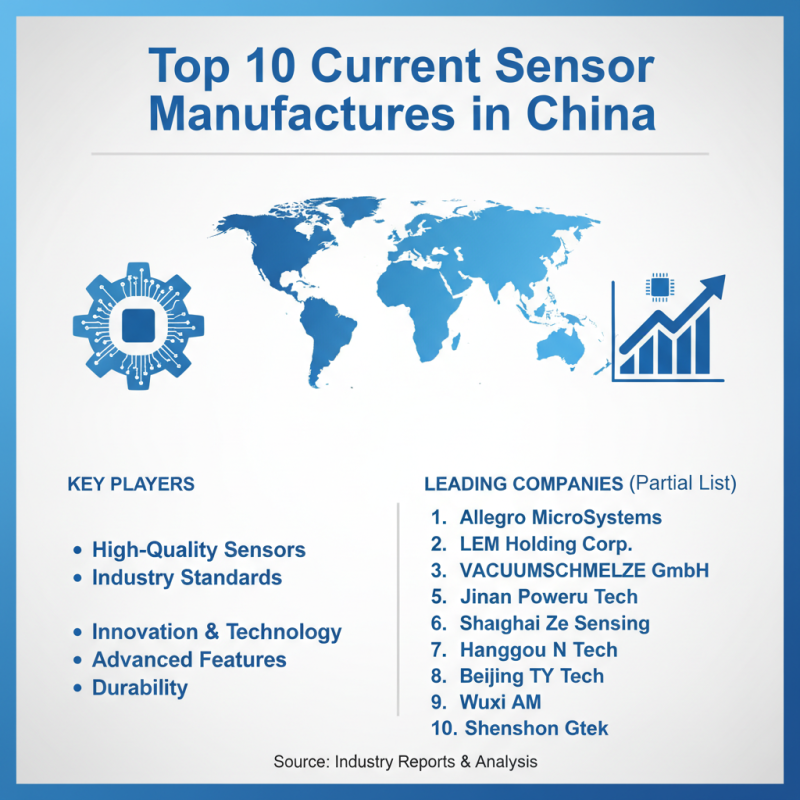
When discussing current sensors, China stands out as a key player. The leading manufacturers in this sector are known for producing high-quality sensors that meet various industry standards. These companies excel in innovation and technology, often integrating advanced features and durability into their products.
Tips: Research thoroughly before selecting a current sensor. Consider the application, environment, and specific requirements. This ensures you choose the right sensor for your needs.
Many manufacturers specialize in different types of sensors, such as Hall effect sensors and Rogowski coils. Each type serves specific applications and offers unique benefits. Understanding the characteristics of each can enhance your project’s success. However, not all products meet the same reliability standards. Some may require more frequent calibration or may have limitations in performance.
Tips: Keep an eye on customer reviews and technical documentation. This can provide insights into product performance and manufacturer reliability. Connecting with industry professionals can help identify the best options.
Comparison of Features and Performance of Leading Current Sensors
When evaluating current sensors in China, it's crucial to consider their features and performance. Key characteristics include sensitivity, response time, and measurement range. Various technologies are available, such as Hall effect, shunt resistor, and current transformer designs. Each type offers unique advantages and disadvantages. For example, Hall effect sensors are non-intrusive and provide isolation, yet they may be affected by external interference.
The performance of current sensors significantly impacts applications in industrial automation and renewable energy. Some sensors excel in accuracy, while others focus on cost-efficiency. A notable challenge is achieving a balance between precision and affordability. Additionally, real-world operating conditions can affect sensor reliability. Many sensors may not perform as expected in high-temperature or high-noise environments. It's essential to test sensors in actual conditions before deployment.
Choosing the right current sensor requires understanding specific application needs. A sensor that works well in one scenario might fail in another. Moreover, continuous advancements in technology mean that what is best today may not hold tomorrow. Therefore, ongoing research and user feedback are invaluable for informed decision-making in selecting these essential tools.
Future Trends in Current Sensor Development in China
In recent years, the current sensor market in China has shown promising growth. The market is expected to reach $2.6 billion by 2025, growing at a CAGR of over 8%. This growth is driven by the increasing demand for energy-efficient solutions and advancements in Internet of Things (IoT) technology. Current sensors are now crucial in various applications, including smart grids and renewable energy systems.
Future trends indicate a shift towards miniaturization and enhanced accuracy in current sensors. Many researchers predict that sensor designs will become more compact, facilitating integration into smaller devices. Reports suggest that by 2024, over 50% of current sensors will leverage wireless communication technologies. This transformation aims to provide real-time monitoring of energy consumption and efficiency.
Despite the rapid evolution, challenges remain. The reliability of these sensors in harsh environments needs improvement. Additionally, manufacturers face difficulties in achieving optimal cost-performance ratios. As the technology advances, the market must address these issues to maintain growth and innovation.
Top 10 Current Sensors in China You Need to Know
| Sensor Type |
Measurement Range (A) |
Accuracy (%) |
Output Type |
Response Time (µs) |
Application |
| Hall Effect Sensor |
0 - 100 |
±1% |
Analog |
10 |
Power Metering |
| Shunt Resistor |
0 - 200 |
±0.5% |
Voltage |
20 |
Battery Management |
| Rogowski Coil |
0 - 1000 |
±2% |
AC Voltage |
30 |
Industrial Applications |
| Current Transformer |
0 - 800 |
±0.3% |
Analog |
50 |
Electric Utilities |
| LCL Sensor |
0 - 600 |
±1.5% |
Digital |
25 |
Smart Devices |
| Magnetic Sensor |
0 - 50 |
±2% |
Analog |
15 |
Consumer Electronics |
| Digital Current Sensor |
0 - 300 |
±0.5% |
Digital |
10 |
Electric Vehicles |
| Integrated Circuit Sensor |
0 - 120 |
±1% |
Analog |
12 |
Home Appliances |
| Capacitive Current Sensor |
0 - 50 |
±3% |
Voltage |
40 |
Industrial Automation |