Leave Your Message
Choosing the right Transformer Core is a practical decision for global buyers in 2026. It affects efficiency, heat, noise, size, reliability, and total ownership cost. A core that performs well in a laboratory may behave differently inside a humid factory, a solar inverter cabinet, or a high-frequency power supply.
William T. McLyman, a respected transformer-design specialist, wrote, “The design of transformers and inductors is more of an art than a science.” His observation remains useful today. Material selection still requires engineering judgment, not only a catalog comparison. Silicon steel suits many power-frequency applications. Ferrite often supports higher-frequency operation. Nanocrystalline and amorphous materials can reduce losses in selected designs, but their benefits depend on operating conditions and manufacturing control.
Real specifications matter. Buyers should examine flux density, core loss, saturation behavior, temperature rise, winding space, insulation needs, and mechanical fit. Ask for test data at the intended frequency and temperature. Check whether the supplier controls tolerances across production batches. Small gaps, rough surfaces, or poor clamping can create unexpected noise and losses.
There is no universal “best” core.
That answer is uncomfortable, but reliable.
A global purchasing team should compare verified performance, certification records, delivery capacity, and technical support together. Price alone can hide redesign costs, delayed approvals, or early failures. This guide will compare major Transformer Core types, explain their practical strengths, and identify where each option may fall short. Some recommendations will remain conditional. That is deliberate, because responsible engineering should leave room for measurement, testing, and correction.
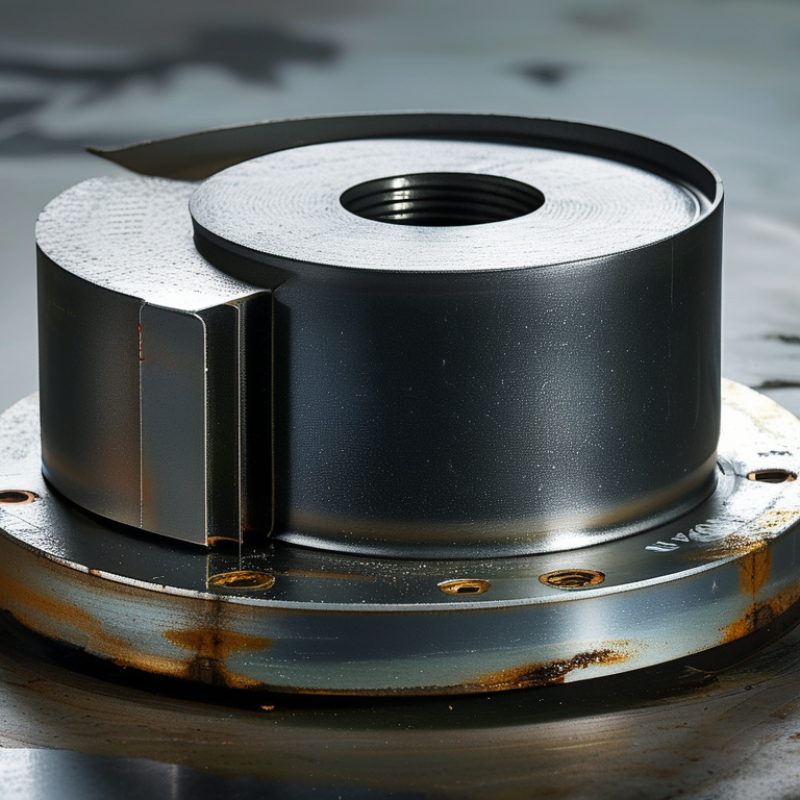
Transformer core selection starts with fundamentals, not marketing claims. The core guides magnetic flux through the transformer’s windings. Its material and shape directly affect efficiency, heat, voltage regulation, and operating noise.
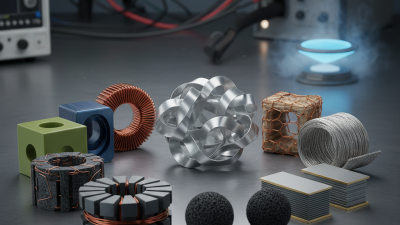
Laminated silicon steel remains practical for power-frequency transformers. Thin laminations reduce eddy-current losses when insulation between sheets is consistent. Amorphous metal can lower no-load losses, but it may require careful handling and suitable manufacturing processes. Ferrite cores suit higher-frequency applications because they offer high electrical resistivity. Their lower saturation flux density can limit performance in compact power designs. Toroidal cores usually shorten the magnetic path and reduce leakage, although winding space can become difficult to manage.
Small details matter. During equipment inspections, I look for core temperature, audible hum, and abnormal idle current. These signs often reveal design problems before failure occurs. A core operating near saturation may produce distorted waveforms and sudden heating. Frequency, flux density, duty cycle, and cooling conditions must be checked together. Global buyers should request verified loss data at the intended frequency and temperature. Test methods matter as much as the numbers. No core wins every application. A lower-loss material may increase cost or complicate assembly. I have seen promising specifications perform poorly after careless clamping or uneven winding pressure. That deserves honest review.
| Core Type | Typical Core Material | Core Construction | Magnetic Flux Path | Main Electrical Performance | Key Advantages | Main Limitations | Common Applications | Best Fit for Global Buyers |
|---|---|---|---|---|---|---|---|---|
| Laminated EI / UI Core | Grain-oriented or non-oriented electrical steel laminations | Stamped E-I or U-I laminations assembled with an insulated air-gap option | Closed magnetic circuit with joints between laminations | Reliable 50/60 Hz operation; moderate core loss and magnetizing current when correctly designed | Low tooling cost, easy sourcing, simple winding and assembly, flexible power range | Joint gaps and leakage flux can increase loss, audible noise and no-load current | Control transformers, power supplies, isolation transformers and general-purpose mains transformers | Cost-sensitive standard products requiring broad availability and straightforward manufacturing |
| Laminated EE / EF / ER Core | Ferrite for high-frequency designs; electrical steel for lower-frequency designs | Matched E-shaped or related laminations with a bobbin-mounted winding | Two parallel outer paths and a central winding leg | Ferrite versions provide low eddy-current loss at switching frequencies; steel versions suit line-frequency use | Compact packaging, good creepage control, automated winding compatibility and many standard sizes | Ferrite has lower saturation flux density than electrical steel; high-frequency design requires careful insulation and loss control | Switch-mode power supplies, DC-DC converters, gate-drive transformers, chargers and auxiliary power units | High-frequency equipment where size, switching loss and creepage distance are important |
| Toroidal Core | Electrical steel, nanocrystalline alloy, amorphous alloy or ferrite | Continuous ring-shaped core with winding distributed around the circumference | Nearly continuous closed magnetic path | Low leakage flux and low magnetizing current are possible; performance depends strongly on winding and material | High power density, low external magnetic field and efficient use of core material | Winding can be labor-intensive; inrush current may be significant; insulation and termination require careful design | Audio equipment, medical equipment, instrumentation, renewable-energy systems and compact power transformers | Space-constrained products where low hum, low stray field and high efficiency justify higher assembly complexity |
| C-Core / Cut-Core | Grain-oriented electrical steel or amorphous alloy | Wound strip core cut into two C-shaped sections and reassembled around the coils | Nearly closed path with one or two precision-cut joints | Lower joint loss than many stamped constructions; good regulation and efficient flux utilization | Reduced core loss, robust mechanical structure and easier coil insertion than a toroidal design | Precision cutting and joint handling are required; generally higher processing cost than basic EI cores | Industrial control, audio power, isolation transformers, instrumentation and medium-power converters | Efficiency-focused designs needing a compact closed path with more flexible assembly than a toroid |
| Amorphous Metal Wound Core | Amorphous iron-based alloy with a very thin rapidly solidified ribbon | Continuous wound ribbon, commonly formed into rectangular, oval or toroidal shapes | Continuous or near-continuous magnetic circuit | Very low no-load core loss compared with conventional electrical steel at suitable operating flux density | Excellent energy efficiency for continuously energized distribution and power applications | Lower saturation flux density, ribbon fragility and specialized processing can increase size or cost | Energy-efficient distribution transformers, reactors and continuously energized industrial equipment | Projects prioritizing lifetime energy savings and reduced no-load losses over minimum initial cost |
| Nanocrystalline Wound Core | Nanocrystalline iron-based alloy ribbon | Thin ribbon wound into toroidal, rectangular or cut-core structures | Continuous or precision-cut closed magnetic path | High permeability, low core loss and strong common-mode noise attenuation over a broad frequency range | High impedance per turn, compact filtering and strong electromagnetic-interference suppression capability | Higher material and processing cost; magnetic properties can vary with annealing, stress and operating conditions | EMI filters, high-frequency transformers, current transformers, renewable-energy converters and power electronics | High-performance systems where efficiency, compactness and electromagnetic compatibility are critical |
| Ferrite Core | Manganese-zinc or nickel-zinc soft ferrite | Pressed and sintered magnetic pieces, commonly in EE, EFD, ETD, RM or toroidal geometries | Closed or gapped path designed for high-frequency excitation | High electrical resistivity greatly reduces eddy-current loss at switching frequencies; usable flux density is frequency- and temperature-dependent | Small size, low high-frequency loss and easy integration with bobbins and surface-mount assemblies | Brittle material, lower saturation flux density and limited suitability for ordinary 50/60 Hz power transformers | Switching power supplies, telecom converters, LED drivers, adapters and high-frequency signal transformers | High-frequency applications requiring compact dimensions and controlled electromagnetic performance |