How to Choose the Right Current Sensor for Your Project?
Selecting the right Current Sensor for a project can be a daunting task. Many factors come into play, from the sensor's range to its sensitivity. According to Dr. Emily Hart, a current sensor expert at Tech Innovations, "A well-chosen Current Sensor can make or break your project's success."
Understanding the specific needs of your application is crucial. What are the current levels you'll be measuring? Will you need a Hall effect sensor or a shunt resistor? Each type offers distinct advantages. A common pitfall is underestimating the sensor's importance. A poor selection may lead to inaccurate readings and project delays.
Additionally, compatibility with your existing systems is essential. This includes integration with microcontrollers or data acquisition systems. Keeping these details in mind will steer you towards a more effective choice. Remember, the right Current Sensor can significantly enhance your project's overall performance.

Understanding the Basic Types of Current Sensors in Electronics
Current sensors are essential in electronics for measuring electrical current. Understanding their basic types helps in choosing the right one for your project. The two most common types are Hall effect sensors and shunt resistors. Hall effect sensors operate by detecting magnetic fields. They provide isolation and are ideal for high-voltage applications. Shunt resistors offer simplicity and accuracy in low-power environments.
Choosing the proper sensor involves considering the project's requirements. Current ranges, accuracy, and environmental factors are critical. For instance, Hall effect sensors are excellent for measuring significant currents, with reports indicating they can handle currents up to 2000A. Conversely, shunt resistors are often used in low-current applications, typically under 50A, for improved precision.
Tips: Always assess the connectivity and footprint of the sensor on your PCB. Misalignment can lead to inaccurate readings. Additionally, remember to factor in temperature coefficients; fluctuations can affect performance. Ensure to evaluate real-world usage scenarios—sometimes, ideal specifications may not reflect actual conditions. Careful planning can save time and resources during the development process.
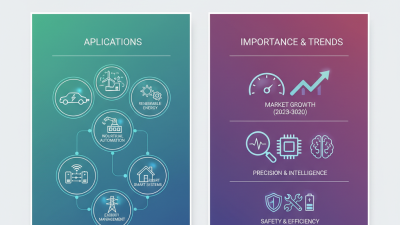
Current Sensor Types and Their Applications
Evaluating Key Specifications: Current Range, Sensitivity, and Accuracy
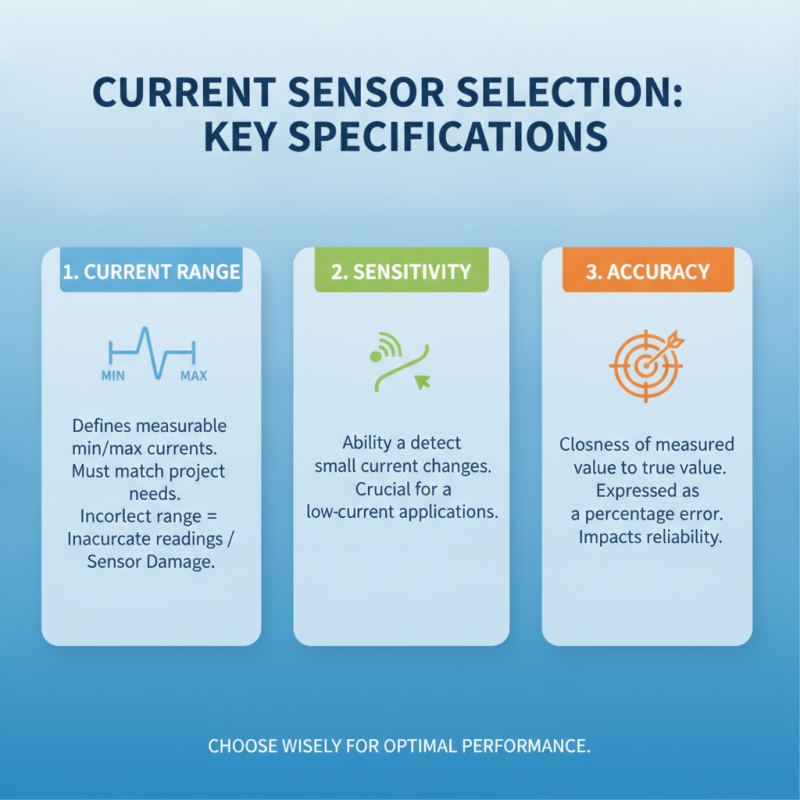
Choosing the right current sensor involves evaluating key specifications such as current range, sensitivity, and accuracy. The current range determines the maximum and minimum currents that the sensor can measure. It’s vital to select a sensor that suits your project’s requirements. A misjudged range can lead to inaccurate readings or sensor damage.
Sensitivity refers to the sensor's ability to detect small changes in current. This specification is crucial for applications that require precise measurements. High sensitivity allows for better detection of minute fluctuations, essential in sensitive circuits. Conversely, selecting a sensor with too high sensitivity can result in noise interference, affecting the overall performance.
Accuracy is another critical factor. It defines how close the sensor's readings are to the actual current value. A sensor with high accuracy reduces the chances of error in your project. However, achieving accuracy often adds complexity and cost. Balancing these specifications is challenging. Each project might require different prioritization of these factors. It’s important to reflect on the specific needs and constraints of your project to find the best fit.
Comparing Hall Effect Sensors vs. Shunt Resistors in Various Applications
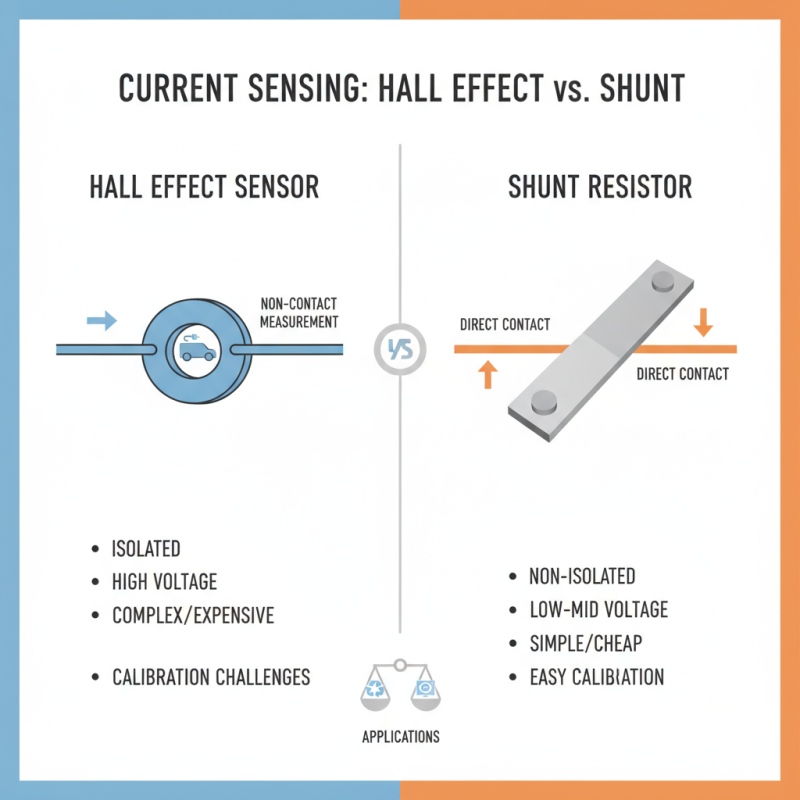
When deciding between Hall Effect sensors and shunt resistors, it's crucial to understand their differences. Hall Effect sensors are non-intrusive. They offer isolation and measure current without direct contact with the circuit. This can be ideal for high-voltage applications. However, they tend to be more complex and expensive. Calibration may also pose a challenge.
On the other hand, shunt resistors are simple and cost-effective. They are very accurate and often used in low-voltage applications. However, they generate heat and consume power, which can affect efficiency. Caution is needed to manage heat dissipation effectively. They can introduce noise to sensitive circuits.
Tips: When choosing a sensor, consider your project's voltage levels. Evaluate the noise sensitivity of your electronic components. Analyze if your application can tolerate power loss or need isolation. The right choice often depends on specific project needs. Reflect on these aspects carefully to find the most suitable sensor for your design.
Assessing Environmental Factors: Temperature and Magnetic Interference
When selecting a current sensor, environmental factors such as temperature and magnetic interference play a crucial role.
High temperatures can affect sensor accuracy. Many sensors have a specified operating range. If your project operates outside this range, results may be unreliable.
Frequent changes in temperature can also lead to drift in sensor readings. You may need to implement calibration techniques to ensure accuracy.
Magnetic interference is another concern. Nearby electronic devices can produce noise, impacting readings. This interference can distort the current flow your sensor is measuring.
For sensitive applications, you might consider shielding options. Using twisted pairs for sensor wiring can also minimize noise.
Evaluate whether your project is situated close to other electronic components, as this may affect performance.
Testing in various conditions provides valuable insights. Monitor sensor outputs in changing temperatures. Observe how interference affects data in different environments.
Experience will guide your choices here. Awareness of these factors enhances system reliability. Implement feedback loops to make adjustments as needed.
Such steps will ensure your current sensor choices align with project requirements effectively.
Determining Cost vs. Performance: Budgeting for Your Current Sensor Needs
Choosing the right current sensor can be challenging. The balance between cost and performance often dictates your options. Some sensors offer high precision, while others are affordable but less accurate. This decision impacts your project's overall efficiency.
When budgeting for your current sensor needs, consider the specific requirements. Higher performance usually comes with a higher price tag. Assess what accuracy you really need. In some projects, slight variations in performance may not matter. Reflect on your project’s goals to avoid overspending on unnecessary features.
Tips: Research various types of current sensors. Look for user reviews and technical specifications. Reach out to experts for advice based on similar projects. Consider prototyping with different sensors to evaluate their performance against your budget. This approach helps you identify what truly meets your needs.